
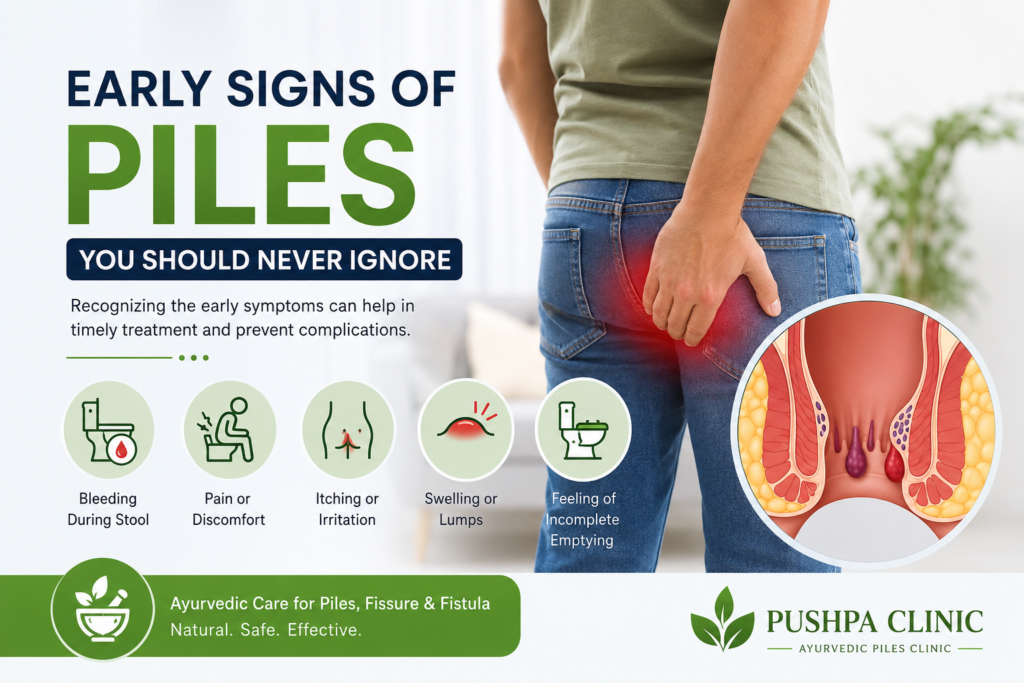
Early Signs of Piles You Should Never Ignore
Piles, also known as hemorrhoids, are swollen and inflamed veins in the lower rectum or around the anus. They are one of the most common anorectal conditions, affecting millions of people every year. Unfortunately, many people ignore the early symptoms because they feel embarrassed or assume the discomfort will disappear on its own.
Recognizing the early signs of piles and seeking timely treatment can prevent the condition from becoming more painful and complicated. At Pushpa Clinic, we believe that early diagnosis and Ayurvedic treatment can help patients manage piles naturally and effectively.
What Are Piles?
Piles develop when the veins around the anus or lower rectum become swollen due to increased pressure. Depending on their location, they are classified into:
- Internal Piles: Located inside the rectum and usually painless in the early stages.
- External Piles: Develop under the skin around the anus and may cause pain, swelling, and irritation.
Why Do Piles Develop?
Several factors can increase the pressure on the rectal veins, including:
- Chronic constipation
- Straining during bowel movements
- Sitting on the toilet for long periods
- Low-fiber diet
- Pregnancy
- Obesity
- Lack of physical activity
- Heavy weight lifting
- Aging
- Family history
Early Signs of Piles You Should Never Ignore
1. Bleeding During Bowel Movements
One of the earliest signs of piles is noticing bright red blood on the toilet paper, in the toilet bowl, or on the stool after passing bowel movements.
Although bleeding may seem minor, it should never be ignored because other digestive conditions can also cause rectal bleeding.
2. Itching Around the Anus
Persistent itching around the anal area may occur because mucus leaks from swollen hemorrhoids, irritating the surrounding skin.
This itching often becomes worse:
- After bowel movements
- During hot weather
- After prolonged sitting
3. Pain or Discomfort While Sitting
People with external piles often experience discomfort while sitting for long hours.
Initially, the pain may be mild but gradually becomes more noticeable if treatment is delayed.
4. Swelling Around the Anal Opening
Small swollen lumps near the anus are another early indication of piles.
These swollen veins may:
- Feel soft initially
- Become painful later
- Increase in size over time
5. Feeling of Incomplete Bowel Emptying
Many patients describe a sensation that their bowel has not emptied completely, even after using the toilet.
This symptom often causes repeated visits to the bathroom.
6. Mucus Discharge
Some individuals notice mucus after bowel movements.
The mucus can irritate the surrounding skin and cause itching or burning.
7. Burning Sensation
Inflammation around the anal region may produce a burning sensation during or after passing stool.
Ignoring this symptom can allow the inflammation to worsen.
8. Mild Pain During Passing Stool
Pain during bowel movements is not always severe in the beginning.
Many patients experience only mild discomfort initially, which gradually increases if constipation continues.
Symptoms That Require Immediate Medical Attention
Do not delay consultation if you experience:
- Heavy rectal bleeding
- Severe pain
- A large painful lump
- Persistent bleeding
- Fever with anal pain
- Difficulty passing stool due to swelling
These symptoms require proper medical evaluation.
Who Is More Likely to Develop Piles?
You may have a higher risk if you:
- Sit for long hours
- Eat low-fiber foods
- Drink insufficient water
- Frequently suffer from constipation
- Are pregnant
- Lift heavy weights regularly
- Are overweight
- Have a family history of piles
How to Prevent Piles
Simple lifestyle changes can significantly reduce the risk of developing piles.
Eat a High-Fiber Diet
Include:
- Whole grains
- Oats
- Fruits
- Green leafy vegetables
- Beans
- Lentils
Fiber softens stool and reduces straining.
Drink Plenty of Water
Aim for 2.5–3 liters of water daily, unless otherwise advised by your healthcare provider.
Proper hydration helps prevent constipation.
Avoid Straining
Do not force bowel movements.
Take your time, but avoid sitting on the toilet for prolonged periods.
Exercise Regularly
Walking, yoga, and light exercise improve bowel function and reduce pressure on rectal veins.
Don’t Ignore Constipation
Treat constipation early to prevent unnecessary pressure during bowel movements.
Ayurvedic Approach to Piles
Ayurveda focuses on addressing the underlying causes of piles rather than only relieving symptoms.
The Ayurvedic approach generally includes:
- Herbal medicines
- Dietary modifications
- Lifestyle changes
- Improving digestion
- Preventing constipation
- Supporting healthy bowel habits
At Pushpa Clinic, treatment plans are tailored to each patient’s condition after a detailed consultation.
Common Myths About Piles
Myth 1: Piles affect only older people.
Fact: Piles can occur at any age, including in young adults.
Myth 2: Bleeding during stool is always due to piles.
Fact: Rectal bleeding may have several causes. Medical evaluation is important.
Myth 3: Piles always require surgery.
Fact: Many cases can be managed effectively with timely treatment and lifestyle modifications.
Frequently Asked Questions (FAQs)
Can piles heal on their own?
Mild cases may improve with dietary and lifestyle changes, but persistent symptoms should be evaluated by a qualified healthcare professional.
Is bleeding always present in piles?
No. Some people experience pain, itching, or swelling without bleeding.
Does sitting for long hours increase the risk?
Yes. Prolonged sitting can increase pressure on the rectal veins.
Which foods help prevent piles?
Fiber-rich foods such as fruits, vegetables, whole grains, and legumes help maintain regular bowel movements.
When should I consult a doctor?
Consult a healthcare professional if symptoms persist, worsen, or if you notice rectal bleeding, significant pain, or swelling.
Conclusion
Ignoring the early signs of piles can allow the condition to progress, making treatment more difficult and recovery longer. Symptoms such as bleeding during bowel movements, itching, swelling, burning, or discomfort should never be overlooked.
Early consultation, a fiber-rich diet, adequate hydration, regular exercise, and appropriate treatment can help prevent complications and improve quality of life.
If you are experiencing symptoms of piles, seek professional medical advice promptly. Early diagnosis and timely management can make a significant difference in your recovery.
About Pushpa Clinic
Pushpa Clinic is dedicated to providing comprehensive Ayurvedic care for patients with piles, fissure, and fistula. Our approach focuses on personalized treatment plans, dietary guidance, lifestyle modifications, and long-term digestive health to help patients achieve lasting relief.
Book your consultation today and take the first step toward better digestive health.
